Author Archives: Greg Slamowitz

About Greg Slamowitz

Unknown's avatar
Greg Slamowitz (www.gregslamowitz.com) is an entrepreneur, investor, author and speaker. He was a co-founder and former Co-CEO of Ambrose Employer Group, LLC, a professional employer organization (PEO), which was ranked among Crain’s New York’s list of the 50 fastest growing companies and was also recognized by the New York State Society for Human Resource Management as one of the “Best Companies to Work For in New York.” Greg co-founded Ambrose in 1997 with $95,000, never accepted outside funding, and sold Ambrose to Trinet (TNET) in July 2013 in a $200 million cash transaction. Greg has also invested in, and is on the board of, a number of early stage companies. Greg enjoys learning and teaching and has spent considerable time over the last several years meeting with entrepreneurs and business leaders and regularly presents his seminar, “Flip the Pyramid”, around the United States. Read about Greg’s presentation to the Morris (NJ) Tech Meetup. http://bit.ly/1rxbxB8 Greg’s book titled “Flip the Pyramid: How Any Organization Can Create a Workforce That Is Engaged, Empowered, Aligned and On Fire!” is available on Amazon, Barnes & Noble and iTunes/iBooks. http://amzn.to/ZrNw8a Greg has also spent considerable time in Washington DC with members and staffers of the U.S. Senate and House of Representatives educated them about the challenges to and solutions for America’s businesses. He was a board member and president of the his industry’s trade association and founded and led its political action committee (PAC). Greg was instrumental in the passage of the Small Business Efficiency Act. http://bit.ly/1vprSd1 Greg is passionate about helping America’s businesses focus on growth, profit, hiring and creating an awesome and healthy experience for each and every working American. Greg was the recipient of the 2001 Ernst & Young New York Entrepreneur of the Year® award in the employment services category. Greg also serves on the Dean’s Advisory Board for Emory University’s School of Law. Prior to co-founding Ambrose in 1997, Greg practiced tax law with Brown & Wood (now Sidley Austin Brown & Wood) in New York City. He holds two law degrees – a Master of Laws in Taxation from New York University School of Law, and a Juris Doctorate, with distinction, from Emory University School of Law in Atlanta. He received his undergraduate degree, cum laude, from New York University. Please visit Greg’s website www.gregslamowitz.com, his LinkedIn Profile and Twitter @gregslamowitz His passions include developing highly functional organizations, engaged cultures, growth companies, health care and wellness, skiing and sailing (www.teammanitou.com)

James Marciano of Strategic Exit Advisors Interviews Greg Slamowitz

james.png

Today I’d like to welcome my good friend, Greg Slamowitz, to E’s with X’s. Greg, thanks for joining us today.


greg_slamowitz.png

James, thank you for having me.

james.png

Today we’re going to talk about Ambrose Employer Group, a company Greg co-founded and recently sold. Greg, please give our listeners some background on Ambrose.

greg_slamowitz.png

Sure, James. I founded Ambrose Employer Group 21 years ago with a good friend, John Iorillo. We were both practicing law with large New York City law firms and we were young associates, very unhappy and miserable in the practice of law.

I read an article about the professional employer organization businesses in the New York Times and it really intrigued me. I approached John and after a bit of discussion we decided to quit our jobs and go into the PEO business.

I have to say in retrospect, it was one heck of a leap of faith. We really did not know what we were doing and what we were getting into. We founded the company with $95,000 in 1997. We worked really hard, figured a lot of things out and I think we were very lucky. Right place at the right time. We were fortunate that we grew very rapidly very quickly.

james.png

You had a special strategy around working with certain clients, didn’t you?


greg_slamowitz.png

Yes. We decided very early on to be a niche, very focused PEO.

From the beginning we focused on high-end, white-collar companies, particularly venture backed technology companies.

Later in our life cycle we built a huge practice around financial services, private equity firms, venture capital firms and hedge funds.

What that focus allowed us to do was to really deeply understand the needs of our client base and put in an incredible amount of effort to tailoring our service offering and our service platform to the needs of those types of companies.

Strategically that was our inside advantage and I think was the reason for our success.

james.png

Also, you built a very special culture, which you wound up writing about in a book. Tell us more about that if you would.


greg_slamowitz.png

Absolutely. I tell that story in my book Flip The Pyramid. So we spent a lot of time thinking about whether customers come first or our internal employees come first and we came to the conclusion that it’s really not the proper question to ask.

We came to the conclusion that leadership’s responsibility was to put an incredible amount of energy and focus on our internal workforce, on our employees. Our responsibility was to build an awesome culture for our employees. Our responsibility was to get every single employee to the top of Professor Maslow’s pyramid.

To get them self-actualizing. To get them out on the court playing the best possible game they could play each and every day.

When you do that, then your employees will deliver an unbelievably awesome experience to your customers. So that was our formula for delivering a wow experience. For us, as leaders, the plan was to put all of our energy into our players and let our players deliver a great experience to the fans and the customers.

james.png

If people want to read more about this empowering culture, the title of the book again is Flip the Pyramid.


greg_slamowitz.png

Yeas, Flip the Pyramid and it’s available on Amazon in Kindle and hardback. http://amzn.to/ZrNw8a

james.png

Terrific. So let’s talk now about the sale of Ambrose. When did you know it was time and what was your main goal around selling the company?


greg_slamowitz.png

Really good question. So very early on we knew that the day would come that we would want to sell our company. So I would say that from the beginning we focused on always dotting our I’s and crossing our T’s. From the beginning we focused on building an unbelievable company. A top tier, an awesome company. We never cut corners. We always did things the right way. We built a very durable, strong, focused, goal-oriented company.

We knew if we did that, when the time came to sell, we would have choices. Now what happened to us, which I think happens to a lot of entrepreneurs, we were in business 15-16 years and we had built up a very nice company. Our EBITDA was approaching $20 million per year and what happened to me, which I know happens to a lot of other entrepreneurs, you do start getting very nervous that substantially all of your personal net worth is tied up in a small or mid-market company. You don’t want to lose that. A bird in the hand is worth two in the bush.

We were getting a lot of phone calls from the private equity community. We were getting a lot of phone calls from bankers and we were getting a lot of calls from our competitors.

The valuations were high. We felt that for our industry valuations were at a very nice place and our business was performing the best it had ever performed and we felt that the convergence of those factors, the desire to take some of our equity, in this case all of our equity, off the table, and the fact that our industry was very attractive and multiples were the highest they’d ever been and our business was performing very well. We thought that it was just a great convergence and a great time to sell.

james.png

When it came to that moment, Greg, did you hire an investment bank and go through a typical auction process, or how did it work for you?


greg_slamowitz.png

Another good question James. So, we interviewed a bunch of bankers but we did not hire a banker. All the bankers that I spoke to, I asked them whom they would market the company to and they were already the people that I knew. We had a lot of interest from within the industry and that was the logical sale. So the multiple that General Atlantic and Tri-Net was willing to pay was really a top multiple.

So we did not go through a formal auction process, although we did speak to a number of potential purchasers. So I would say it was a very abbreviated auction process.

Honestly, in retrospect, I am not certain whether that was the right decision. I sometimes think that we probably would have benefitted by hiring a banker and going to a full auction process.

I’m not just saying that, James, because I’m here today speaking to you. It’s something I’ve spent a lot of time thinking about.

james.png

I know you hired a top-notch attorney to help you with the documents; how do you think it would have turned out differently if you had hired a banker?

greg_slamowitz.png

I think I might have been able to get one more turn on the sale if we hired a banker. Then you did allude to something. I have to say since we didn’t hire a banker, I hired one of the best lawyers I’ve ever worked with. Actually I hired the best lawyer I ever worked with, Filip Moerman over at Cleary Gottlieb. I had never been so happy to pay a lawyer’s bill in my life. Filip was really phenomenal and he and his associates did an amazing job for us.

james.png

What would you say was the most difficult part of selling your business — either during the process, or after?


greg_slamowitz.png

Well, the most difficult part of the process was walking away from the company immediately after closing. I spoke to enough friends who sold and stayed that I knew that wasn’t going to be an experience that was would work for me. So I had to make the decision that if I were to sell my company that I would leave the day I got my wire transfer.

I was lucky. I raised that with General Atlantic and Tri-Net and they were totally cool with that, but coming to that conclusion pre-sale was emotionally really, really difficult.

Then we sell the company and we announce it to everybody and I get my wire transfer and you’re feeling pretty awesome about that and then I’m packing up my desk and hugging people and crying and leaving. Very emotional.

Then you go home and you’re like – what do I do now?

james.png

I know it’s pretty surreal. Let me ask you two last questions. First, what are you doing now, and second if you could only give one piece of advice to an entrepreneur thinking of selling their business what would it be?


greg_slamowitz.png

So first, what am I doing now. So I’ve been out of Ambrose now three and a half years. I look back at those three and a half years and I have to say I don’t know how I ever had a day job. I’m busy.

I’m busy all the time.

It’s just amazing how you’re just a Type A entrepreneur. That doesn’t change. Trust me. You will find things to do. Your phone starts to ring. In this day and age if you have a nice transaction, you were a success in your industry, your phone rings.

Also because of my book, I’m spending more time than ever on the speaking circuit, which I really enjoy doing. I’m a guest lecturer at Rutgers Business School, at Tufts University, at Harvard Online Extension. . .

I’m speaking at a tech conference in Gdansk, Poland in May. I’m spending a lot of time working with a private equity firm flying around the country helping them assess leadership teams and companies.

I’m also doing some leadership coaching of a few mid-market companies. Working with leadership teams on a quarterly basis helping them set goals and build a highly functional corporate culture. This is all a lot of fun.

james.png

You’re busy.


greg_slamowitz.png

Yeah. I also wanted to say that I think any entrepreneur selling his or her company should anticipate having some anxiety around it.

You can’t ignore it. You have to think about it and emotionally work through it.

So based on my experience, I have two pieces of advice.

One is I think you have to do a very frank assessment of your company. Is your company ready to be sold? Is it a high functioning, highly performing company that’s at the top of its game or is it something less than that.

You really have to, I think, assess objectively your company and where it is in its life cycle because that is gonna have a big impact on the valuation you’re going to get for that company.

I’m seeing right now when I’m flying around the country with the private equity firm I am working with, I’m seeing a big disconnect between where these companies are and where the entrepreneurs think these companies are and their valuation expectations.

That can be very sobering for a lot of entrepreneurs. They’re not objective about where their company really is in its life cycle, and their valuation expectations are out of whack.

james.png

That’s great advice.


greg_slamowitz.png

Then I think the other thing that I see is a lot of entrepreneurs, they want to take significant chips off the table, but they’re not ready to let go of the company and sometimes that is not an option you’re going to have.

If you’re going to take off a significant number of chips, you have to be emotionally and intellectually prepared to step back and let go.

james.png

Absolutely. Greg Slamowitz, the founder of Ambrose Employer Group. It’s been a pleasure talking to you today. I really appreciate your time.


greg_slamowitz.png

Thank you James.


WHAT I LEARNED ON MY VISITS TO WASHINGTON DC

On December 19th, 2014, the President of the United States signed into law a bill in which I, and others, had put a tremendous amount of effort. This bill, the Small Business Efficiency Act (SBEA), provides Federal statutory recognition of the professional employer organization (PEO) business model. This is the industry in which I had been involved with for 16 ½ years as the Co-Founder and Co-CEO of Ambrose Employer Group, a PEO based in New York City. While I was in the industry, I was passionate about the passage of this bill. I believed that Federal, statutory certainty would benefit the whole industry and our customers.

Now that the bill has finally been enacted into law and that I have exited the industry (we closed on the sale of Ambrose to TriNet on July 1, 2013), I thought it would be helpful to share my experiences, and what I learned, in my endeavor to pass Federal legislation. This blog post is written for entrepreneurs and industry leaders (and I use this latter term broadly) with grit, perseverance and vision, because that is what it takes to pass a bill in Washington.

Our three most formidable obstacles in Washington were a dysfunctional Congress, which had a proclivity for not passing legislation (we needed a larger legislative vehicle, and there were few); the slow, arcane and laborious legislative process, which provided the labor unions with plenty of opportunities to foil our efforts; and our own industry, which was hobbled by petty politics, malicious gossip and small mindedness. As to the last item, the industry itself was one of its largest obstacles!

Up until my election as the president of our trade association in 2008 (thankfully only for a one year term), I was not involved at all in our Federal lobbying efforts. In fact, very few in our industry were involved in this critically important effort. The effort was entrusted to a very technical, and expensive, Washington DC tax lawyer (i.e., a lobbyist), a mid level government affairs director at a comparatively stagnant PEO where leadership had lost interest in the industry, a founder of a small, local PEO, and a series of transient, mediocre trade association “government affairs” people.

Our industry, through our trade association, had been funding this small group for over a decade without accountability, transparency or results. Each year they would report to the trade association board that they were the right “experts”, they didn’t need anyone’s help, especially from their industry colleagues “unfamiliar with the ways of Washington”, that these things take time, and that the labor unions, and thus the Democrats, were blocking our efforts (the last two points were true; the first two were not). Does this sound like a recipe for success? Absolutely not. Einstein said this is the definition of insanity. The same tactics, over and over again, whether feeble or heroic, were not going to get our bill passed in Washington.

If we continued to allow this small, insular group to retain sole responsibility for the passage of the bill and continue with its myopic more of the same strategy, it just wasn’t going to happen. I knew we had to change our strategy and this became one of my primary agenda items while leading our trade association and for some time thereafter. We needed a larger tribal effort. We needed more people in our industry involved, more people heading to Washington, and more capable people advocating our value proposition for America’s small businesses and their employees. The people in business who were successfully selling our services to America’s small businesses were the people who could sell our value proposition to our elected Members in Washington, of course with the help of skilled lobbyists. This strategy ultimately prevailed.

What was astounding, however, was the juvenile blow back from the small group of technical “experts”—they didn’t want any help at all! They refused, pouted and then, very late in the game, finally, and reluctantly, cooperated.   It took a tremendous amount of energy to work around this petulant group and dodge their petty, disruptive shenanigans. I think they spent more time trying to undermine and stop others who were joining in the effort than on the passage of the bill. This was total insanity and, something as a leader of a highly functional growth company, for which I was not prepared.

Their first argument, which they relentlessly peddled to our industry, was that only they could advocate on behalf of our industry because they were the “trained professionals” and they knew how to talk to Members of Congress and their staffers. This is one of the biggest lies in Washington. Banal lobbyists and government affairs folk routinely perpetuate this lie. Do not succumb to this nonsense. The truth is that elected Members prefer to talk to entrepreneurs and people in industry, and to the contrary, they generally loathe talking to middling government affairs people and second-rate lobbyists. In fact, our trade association’s “professionals” were rather inept in advocating on our behalf. On one memorable visit, the trade association “professional” told the congressional staffer the reason we needed this bill was so more of its members could go public. The Democratic staffer was flabbergasted with this rationale. This was an embarrassment. This bill was for America’s small businesses and its employees! Not for us. The other “trained professionals” involved similarly failed in articulating our compelling value proposition. At this point, while the technical had its place, I knew we needed more people in our business involved in conveying our value proposition for America’s small businesses and their employees and we certainly needed top-tier lobbyists who shared, and agreed with, this broader strategy. Just like in business, in Washington, you must clearly and relentlessly articulate a compelling “why” to Members and their staffers (see Simon Sinek’s work).

After this small group reluctantly retreated from this argument, that only government affairs “professionals” can lobby, they then spent a year or so arguing to trade association membership that individual companies were prohibited from directly engaging in any lobbying activity in Washington pursuant to an implied trade association rule and thus any such activity had to be approved and controlled by the trade association (they insisted that one of their “minders” had to accompany me and others on any “approved” Hill visits and then they proceeded to bring me before some trade association “disciplinary” committee to have me sanctioned for “unauthorized” lobbying). This was a royal distraction to our advocacy efforts in Washington and was finally dropped simply because I refused to participate in their kangaroo court. I just stayed focused on the prize, continued my trips to Washington, and clearly articulated our why.

In truth, I ignored this nonsense because I recalled from my law school days (where I read the United States Constitution) that Article I of the Bill of Rights states, “Congress shall make no law…abridging the freedom of speech, or of the press; or the right of the people peaceably to assemble, and to petition the Government for redress of grievances.” This is exactly how our Founders intended for our government to work. Citizens travel to Washington and petition our government. Thousands upon thousands of people travel to Washington each year with this sole intent. When you go to Washington, and walk the halls of Congress, you will meet your fellow citizens everywhere. Washington has worked this way for over 200 years. So, if you have an issue that is important to you, go to Washington! Don’t let some middling government affairs functionary or lobbyist tell you otherwise. They do not have an exclusive right to petition Washington, although some will tell you this with a straight face and with absolute conviction. Do not let these naysayers intimidate you. On the contrary, our Country’s Founders expressly gave you the Constitution right to advocate to Members of Congress and Members know this. This is one of things that make our Country great, so go to Washington and state your case!

Now, once I started visiting Washington (where there are some exceptional hotels, I love the Willard, and a number of awesome restaurants), thinking of Einstein’s maxim, I quickly learned that we also needed to make political contributions to increase our access to Members. This is just how it works in Washington. The math is simple. Four hundred and thirty five House Members are up for re-election every twenty-four months and the average house campaign cost close to two million dollars per cycle (in 2012, each House Member on average raised $1,689,580 per cycle, $2,315 per day; Senators, on average, each raised $10,476,451, $14,351 per day.). Campaign reform limits the amount they can raise from any one individual, and if a Member is in the minority or not a chair of a committee, it is extremely difficult and time consuming to raise this amount. So while I was the president of our trade association, in 2008 I created a political action committee (PAC) and raised $329,439 from my industry peers over the following four-year period. I also supplemented this with tens of thousand of dollars of my own personal political contributions (I was rather dismayed when I learned that political contributions are non-deductible). Unfortunately the PAC was also stymied by petty trade association politics (the business people raised and contributed the money but then the government affairs “experts” wanted to spend it!), so my personal political contributions were a necessary work around.

Because Members spend an inordinate amount of time raising money in drips and drabs, there are a myriad of opportunities to meet Members in small group settings. Although important, I did find the fundraisers back in their home districts larger and less intimate. Fundraisers in Washington, on the other hand, where often small gatherings and generally attended by DC lobbyists. This was a great advantage for an entrepreneur—you will stand out. For better or worse, political contributions, to both sides of the aisle, are just a necessity in Washington. It is how our system works.

With this in mind, I picked up the pace and started flying to Washington once or twice a month visiting with Members and staffers in Longworth, Cannon, Rayburn, Russell, Dirksen and Hart (the office buildings for Members). I also made political donations and attended fundraisers for Members. I did this for five and half-years (from 2008 through first half of 2013). In total, I met with close to 200 Members and their staffers in Washington and a dozen or so visited with me and toured our operations in New York City. I quickly learned that Members would much rather talk to an entrepreneur or someone from business than a technical lobbyist or mid-level government affairs director. Building relationships with Members was a lot of fun, and I can honestly say that every Member I met, whatever his or her politics, was a patriot. The House is definitely the “people’s house”—a reflection of American society.

I often found myself at many events, where I was the only entrepreneur, with a dozen or so lobbyists, and the Member of Congress, and the Member would invariable spend more time with me than anyone else. I also quickly learned that I was also way more capable of advocating our value proposition for America’s small businesses and their employees than hired lobbyist or government affairs people. I had sold and closed our value proposition and stood behind the delivery of the service. The lobbyist and government affairs people had not. I had credibility, and the Members, and lobbyists, knew this. In fact, the better lobbyists in Washington are not threatened by industry leaders but are skilled at leveraging industry’s entrepreneurs and leaders. Find these lobbyists!   They are worth their hefty monthly retainer. While political contributions can be used effectively to gain access to Members to advocate on your behalf—be sure that weak and ineffective government affairs “experts” and lobbyists do not squander these face-to-face opportunities. This is a royal waste of money.

I was fortunate in that one of our larger competitors had a very talented in-house lobbyist based in Washington DC, who I consider a tenacious industry leader and excellent political strategist and tactician (he also lived near the airport and was gracious enough to meet me curbside even when I took the 6 am shuttle! :-)), and together and with others we executed on this collaborative journey. We went outside of the trade association and directly hired two exceptional Democratic lobbyists. Another large competitor had also retained several exceptional Washington DC lobbyists who then also joined our collective efforts. Other entrepreneurs joined in as well. Over the vociferous objections of our trade association, a few of its members, and its small group of “trained professionals”, we continuously refined and coordinated strategy and tactics, while trying our hardest to avoid the petty politics and malicious gossip which was debilitating the trade association. We tried to get them to focus on, and work towards, our agreed to prize: the passage of our bill. We adopted the maxim: lead, follow or get out of the way. They reluctantly followed. Six years after adopted and implementing a broader and more sophisticated strategy in Washington, in December 1014, the Republican controlled House and Democratic controlled Senate passed a tax bill that included our industry’s legislation. Unlike the past, where labor had been successful in blocking our legislation, labor’s objections fell on deaf ears because we had tirelessly articulated our compelling why to so many Members and their staffers, especially on the Democratic side of the aisle. Shortly thereafter the President signed the bill into law. Success!

So, in sum, here is what I learned on my visits to Washington. If you want to pass legislation in Washington, avoid the petty politics, malicious gossip and small mindedness that seem to consume trade associations. Find a group of similarly minded, driven companies and industry leaders, and find and hire top rate lobbyists and government affairs people who aren’t threatened by your involvement but will enthusiastically compliment and leverage your involvement. Work hard, go to Washington (at lot), make political contributions to both sides of the aisle, and make a lot of friends. Finally, remember, it isn’t about you but about making America better (e.g., your “why”), and every no is one step closer to yes. You need grit, perseverance and vision. I wish you Godspeed on your trip to Washington.

20151228-LG-IMG_0039

Dashiell and me with Senator Marco Rubio (R-FL)


Meeting with Congressman Lee Zeldin (R-NY1)

Meeting with Congressman Lee Zeldin (R-NY1)

With Senator Snowe

With Senator Snowe

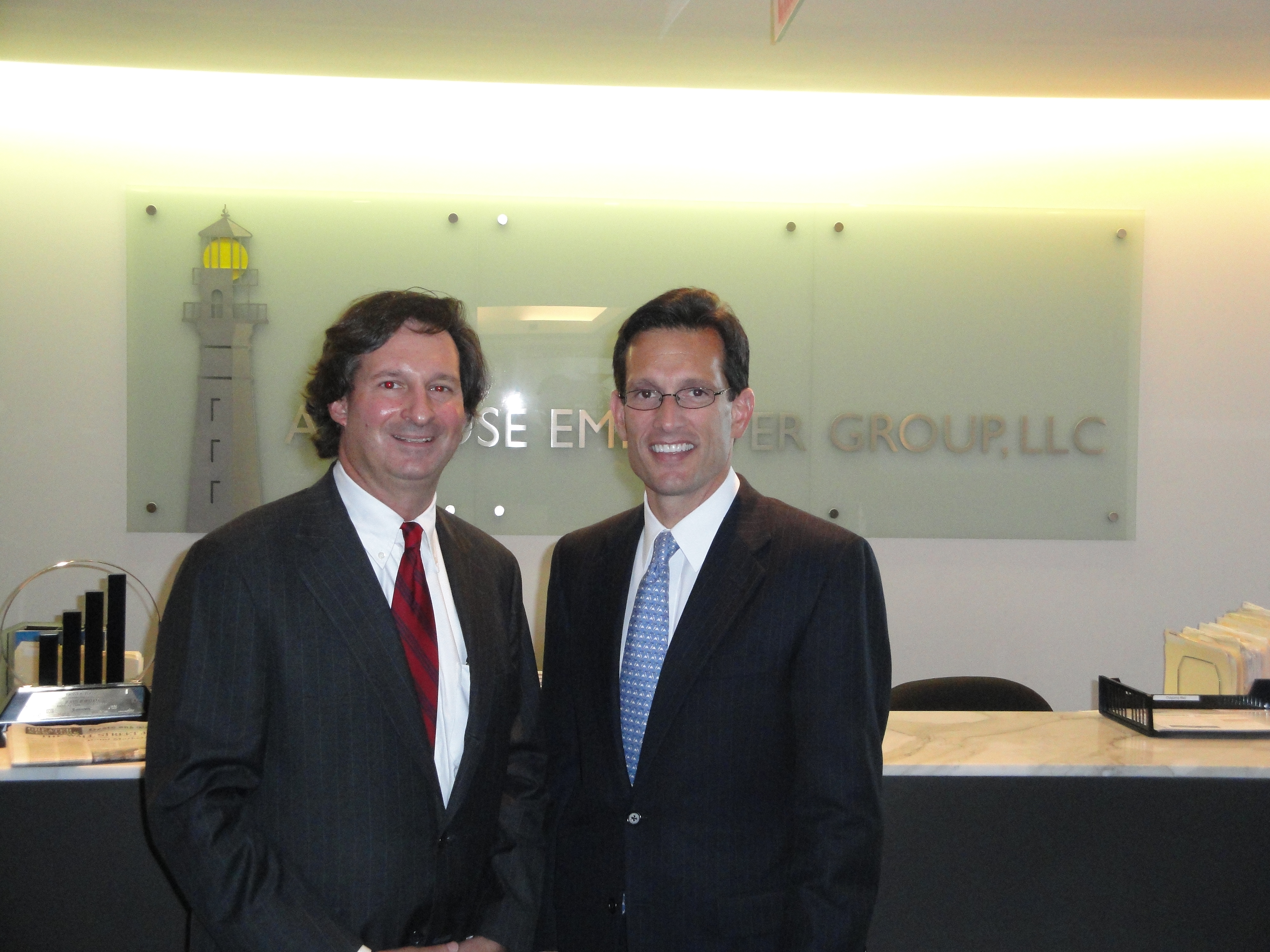
With Majority Leader Eric Cantor

With Majority Leader Eric Cantor

With Congressman Xavier Becerra

With Congressman Xavier Becerra

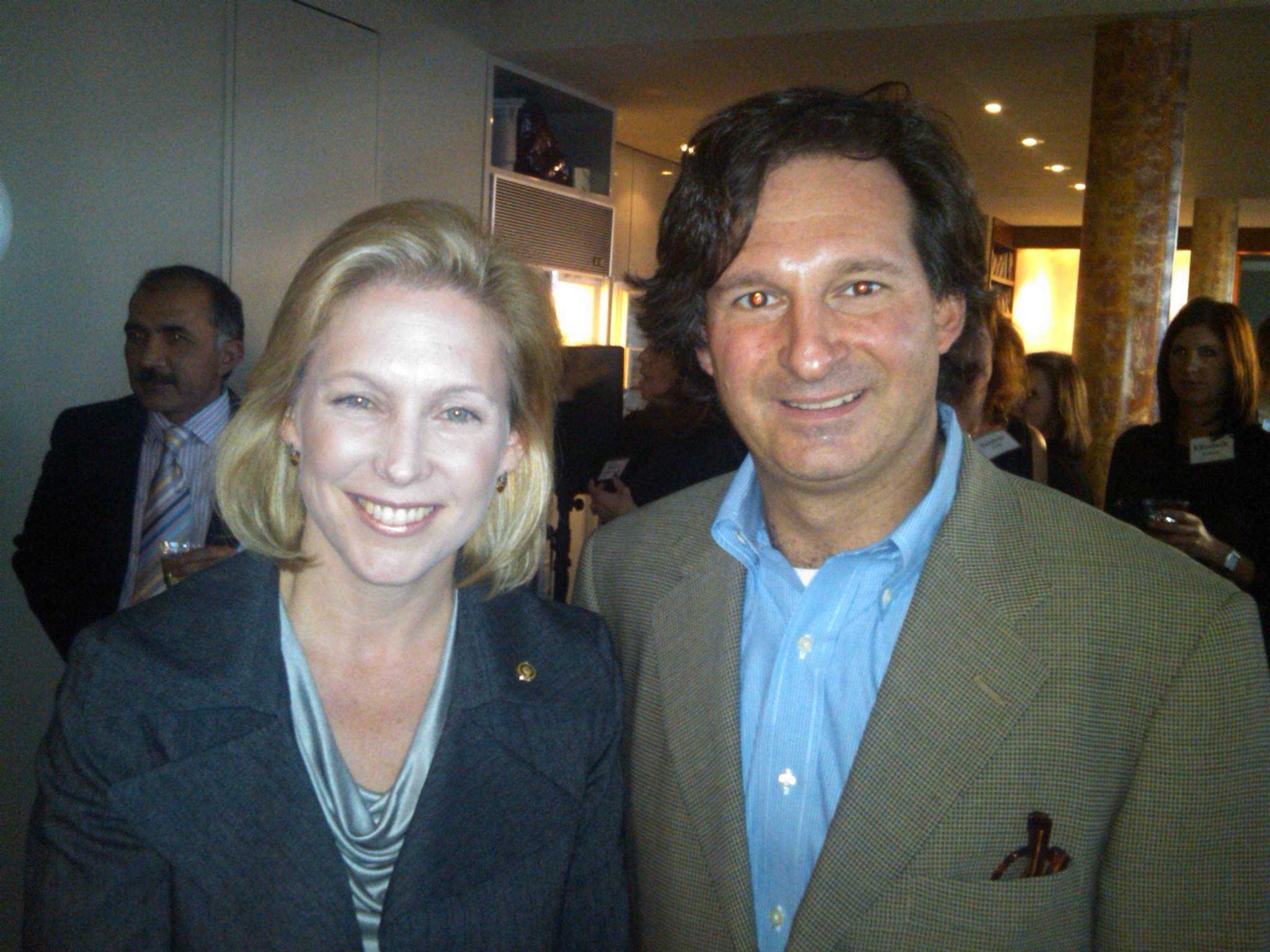
With Senator Gillibrand

With Senator Gillibrand

With Congressman Bill Owens

With Congressman Bill Owens

With Congressman Tom Reed and Congresswoman Nan Hayworth

With Congressman Tom Reed and Congresswoman Nan Hayworth

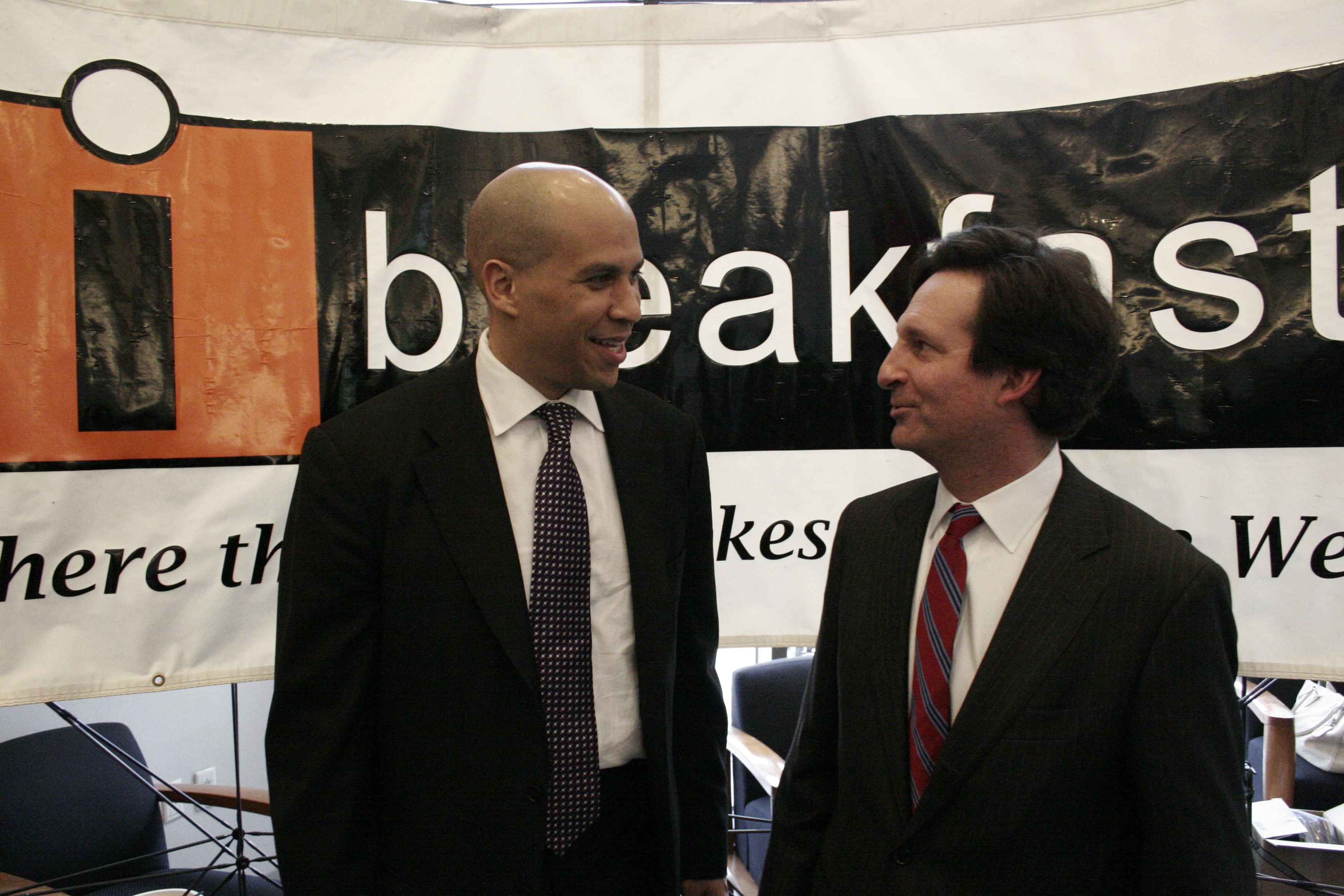
With Senator Corey Booker

With Senator Corey Booker